Philipp Grieß & Manuel Ernst
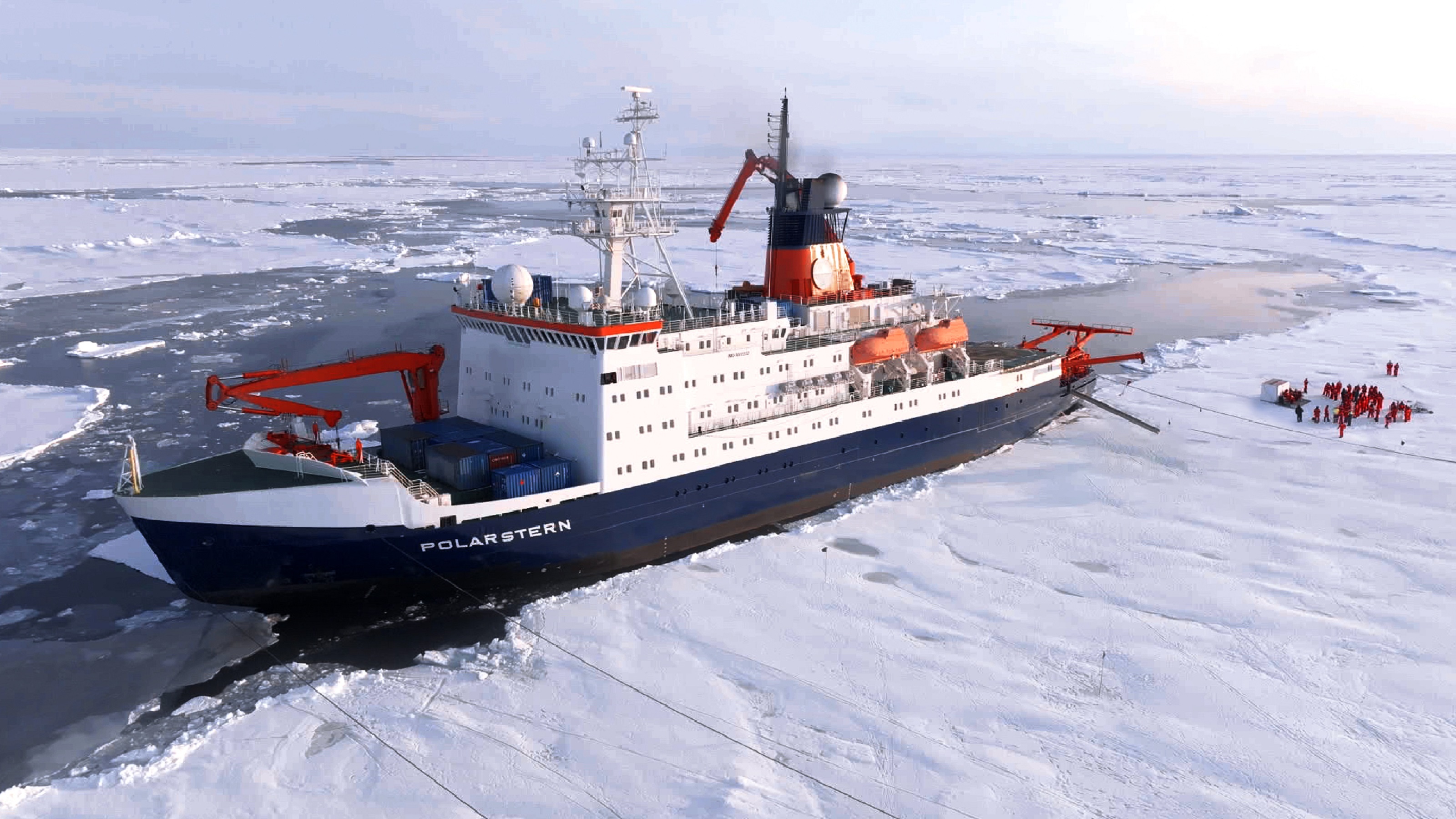

EXPEDITION ARKTIS 2 – TAUCHFAHRT AM NORDPOL (original title)
UFA DOCUMENTARY • Documentary & Factual • ARD • December 29, 2023-
On December 29, 2023 at 9:45 p.m. on Ersten and available in the ARD media library since December 26, 2023
-
The voice of actress Maria Furtwängler takes viewers to the northernmost point in the world
2023 – the hottest year since climate records began. The “Polarstern”, Germany’s only icebreaker, is making its way to the North Pole. With the Arc.Watch expedition, led by Prof. Dr. Antje Boetius, Germany’s best-known marine biologist, an international research team wants to investigate marine life in the Arctic Ocean. The “Polarstern” was already at the North Pole in 2020. Scientists investigated the sea ice and the atmosphere. Now they want to understand how life at the North Pole works and are diving to a depth of 4,000 meters for the first time. What they discover there turns previous knowledge about the Arctic system on its head.
The documentary EXPEDITION ARKTIS 2 – DIVING AT THE NORTH POL accompanies leading scientists around Antje Boetius, Director of the Alfred Wegener Institute, Helmholtz Center for Polar and Marine Research, on their discoveries. What lives at a depth of 4000 meters on the sea floor? What do these organisms feed on? How is life in the Arctic connected to the ice and what happens when the ice disappears?
These discoveries are only possible thanks to the crew of the “Polarstern”. Captain Stefan Schwarze is a living legend of seafaring in polar regions and has already traveled to the North Pole for the sixth time. The expedition is accompanied by the renowned polar and scientific photographer Esther Horvath. No one has photographed the Arctic as intensively as she has in recent years. Esther Horvath loves the darkness of the polar night. Now she has faced 24 hours of brightness.
EXPEDITION ARKTIS 2 – TAUCHFAHRT AM NORDPOL is a UFA Documentary production commissioned by NDR, RBB, HR and Radio Bremen for Das Erste and ARD Mediathek. The producers of the high-end documentary are Marc Lepetit and Philipp Grieß, who is also the director. Nico Hofmann and Ute Biernat are responsible for the production material relating to the MOSAiC expedition. Norddeutscher Rundfunk (NDR) is in charge of the project within ARD. Marc Brasse (NDR) is editorially responsible.
Further information
On 3 August 2023, the new Arc.Watch expedition, organized by the Alfred Wegener Institute, Helmholtz Centre for Polar and Marine Research (AWI), set off from Tromsø, Norway. Four years after MOSAiC, the largest Arctic expedition in history, UFA was once again the exclusive moving image producer on board the German icebreaker “Polarstern”. The two-month expedition to the Arctic was accompanied by a UFA Documentary camera team.
Marc Lepetit, producer and managing director of UFA Documentary: “I still remember exactly how excited I was about the results and findings of the MOSAiC expedition. On the initiative of Nico Hofmann, a crew under the direction of Philipp Grieß was on board the research vessel “Polarstern” and produced the documentary ARCTIC DRIFT for Ute Biernat’s UFA Show & Factual – impressive and visually stunning. It was a huge international success and the first collaboration with the AWI. Three years later, the first results of MOSAiC have been evaluated and some of them will also find their way into ARCWATCH – HOFFNUNG IM EIS (AT). It is a privilege for us as UFA Documentary to be able to spend exclusive time on the “Polarstern” with Antje Boetius and her team and to produce another documentary with ARCWATCH – HOFFNUNG IM EIS (AT). Our team will do everything to produce impressive images on and under the ice to show viewers what awaits us and where humanity’s journey could take us.”
Philipp Grieß, director and producer of UFA Documentary: “Being able to accompany the ArcWatch expedition led by Antje Boetius is exciting for many reasons: what the scientists on the German research icebreaker “Polarstern” are achieving in the Arctic is unique in the world. We will be able to see at first hand how this groundbreaking research is carried out, what life forms are hidden under the sea ice in the deep sea and we will see what concrete insights we can derive from it for our political action. None of this would be possible without the crew of the “Polarstern”. We will once again be able to experience the day-to-day work of one of the most experienced crews in the polar regions. They find a solution for every challenge the ice throws at them. It is difficult to say what we will discover on this journey, because every expedition into the ice is a journey into the unknown. It is a great honor for us as UFA Documentary to be part of this team.”
Prof. Dr. Antje Boetius, expedition leader and Director of the Alfred Wegener Institute: “My 50th International Deep-Sea Expedition is about returning to places in the Arctic Ocean that have become a kind of second home. Since my first expedition into the ice 30 years ago, I have wanted to know how life works in an ice-covered ocean, right down to the deep sea. The Arctic is one of the hotspots of climate change, and the shrinking sea ice is rapidly changing this unique habitat. We want to document whether and how the creatures of the Arctic Ocean are adapting. In times of increasing threats to marine life, we want to give Arctic algae, animals and microbes a face and a name. I am very pleased that UFA will be there with its camera team and will accompany the rapid change with effects right into the deep sea. This will allow a wide audience to participate in the research in this unique region and accompany us on our discoveries.”
Maria Furtwängler, actress who lends her voice to the documentary: “I am always fascinated by the insights science can provide us with about nature, and I learn something new every day from great experts like Prof. Dr. Antje Boetius. At the same time, I am alarmed by the events that are happening not only in the Arctic, but everywhere on this planet, including here. Our livelihood is being destroyed more and more. The fact that we know far too little about this is also due to the fact that topics such as biodiversity and the protection and preservation of species are not shown enough on television. This was also revealed by the recently published study by the MaLisa Foundation and I would very much like to see more reporting on biodiversity in particular. I am therefore delighted that UFA is continuing to raise the profile and awareness of these important issues with the second part of EXPEDITION ARKTIS.”
On September 29, 2023, the research vessel “Polarstern” returned to its home port of Bremerhaven.
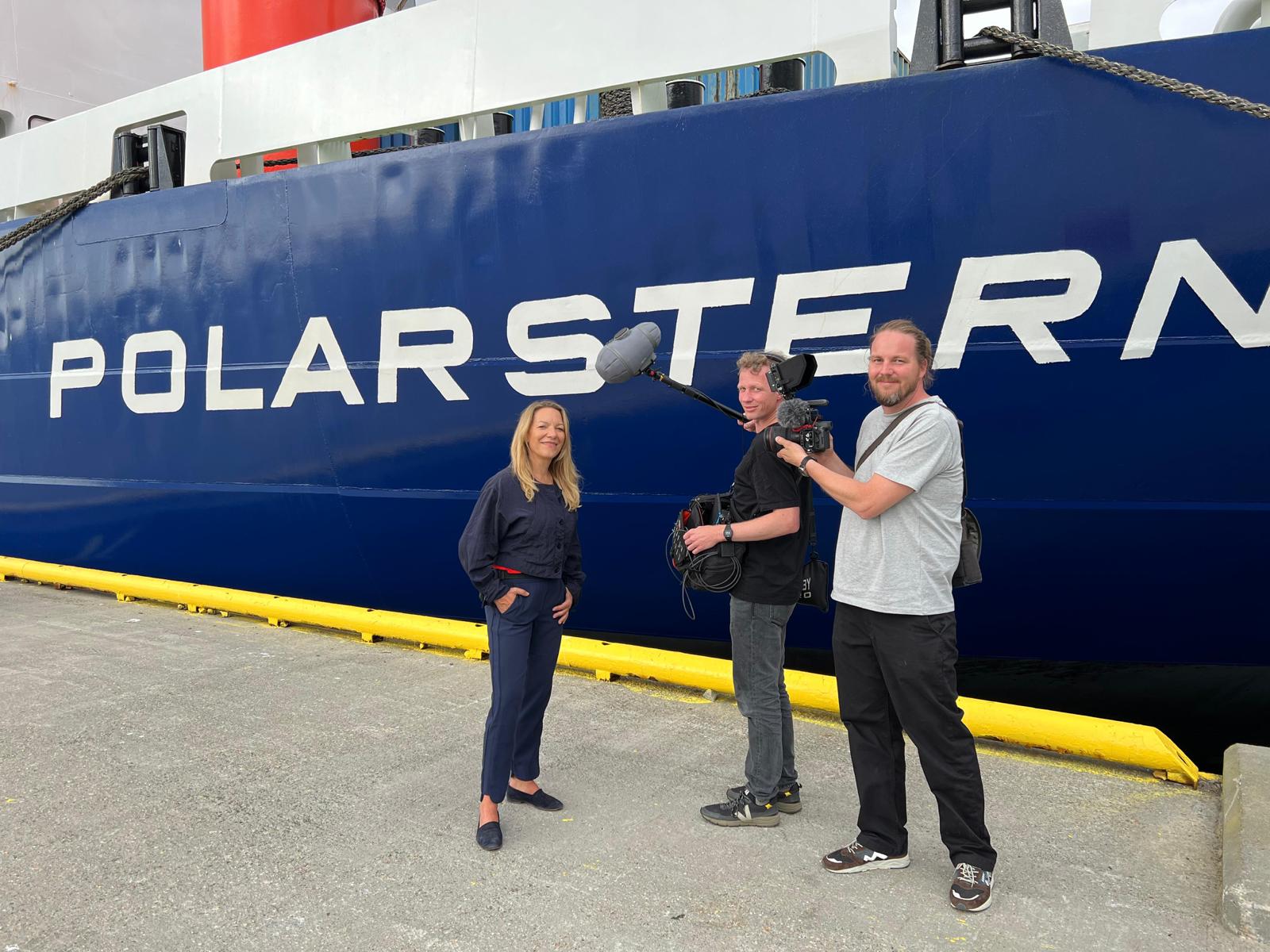
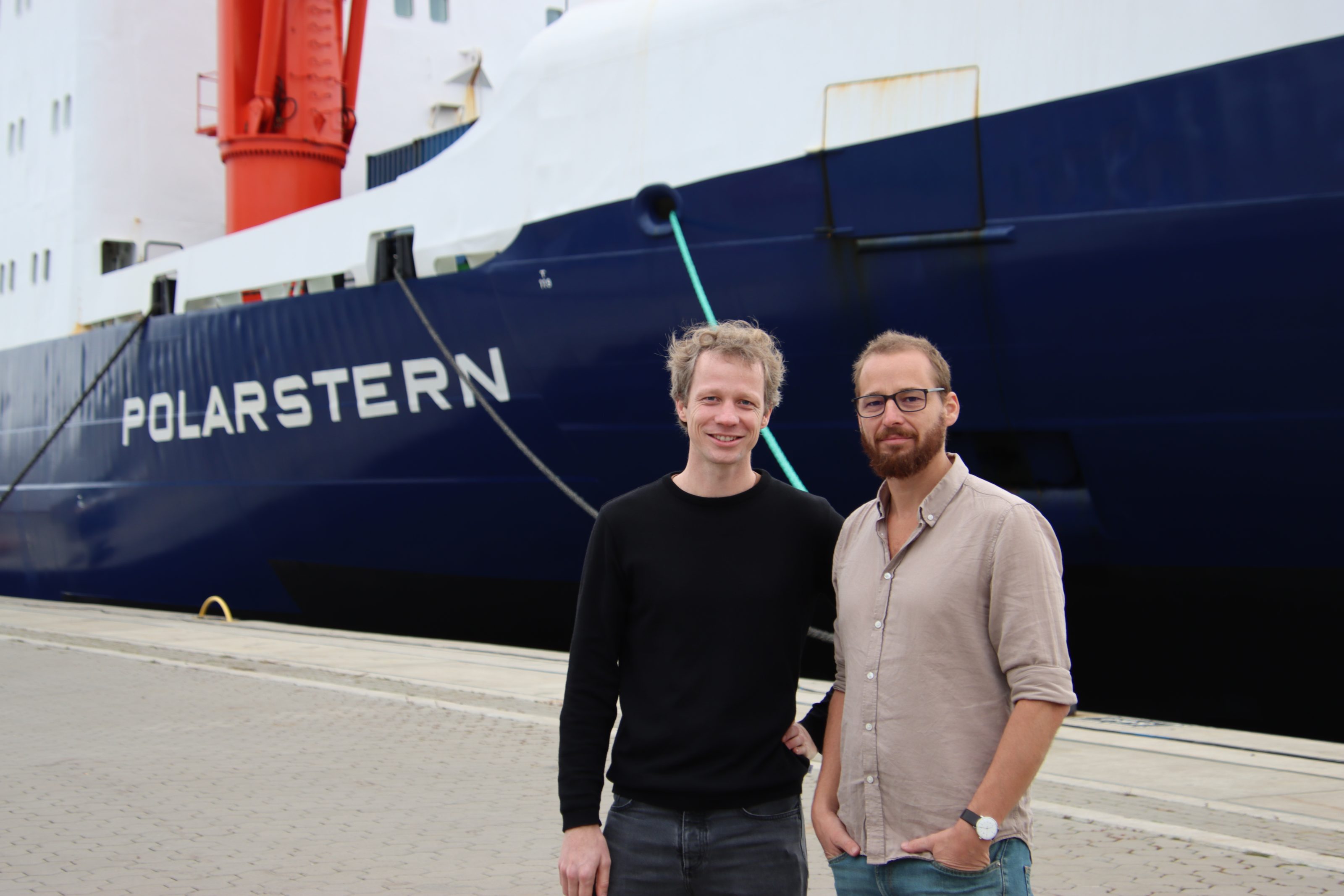
© 1
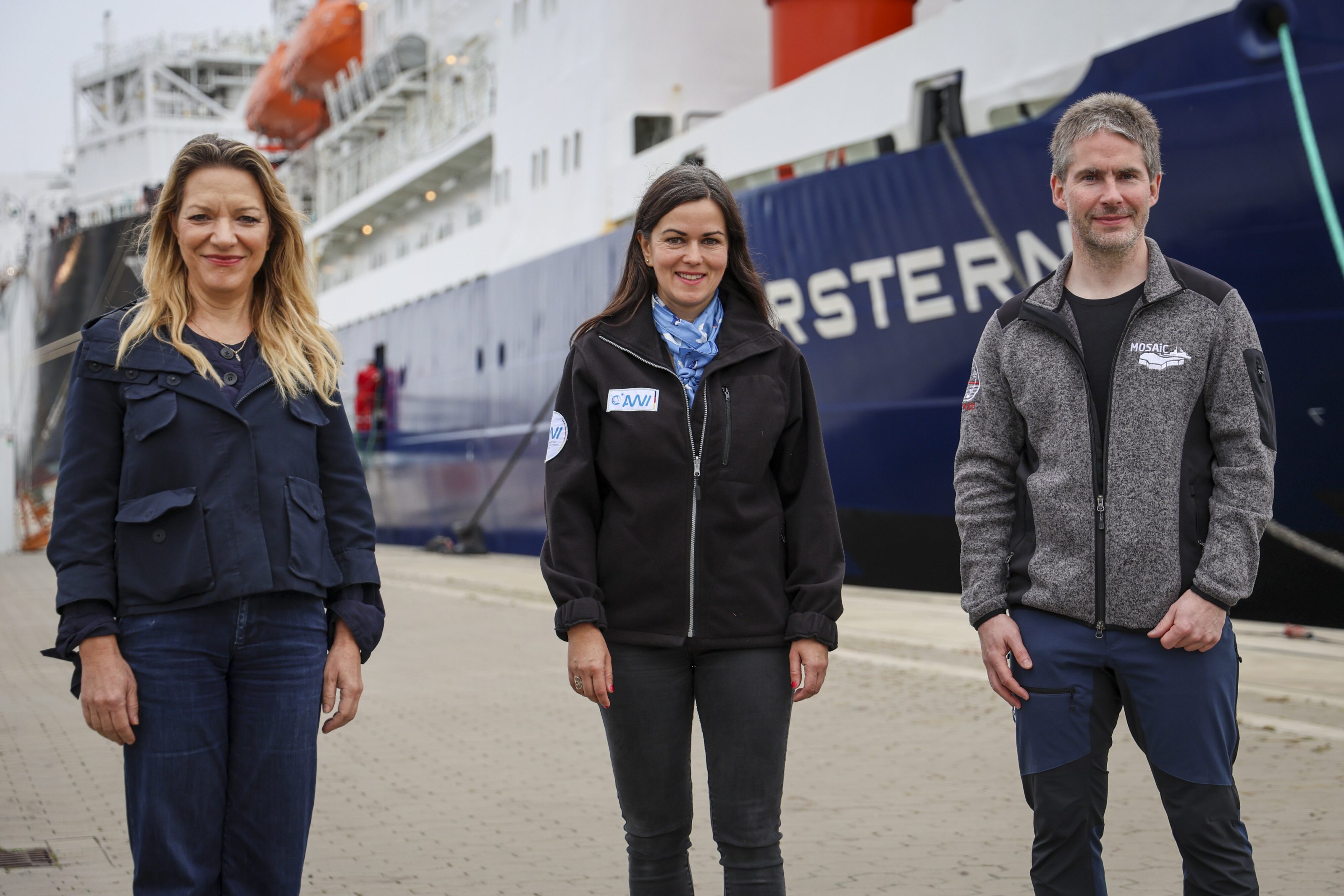
© 2
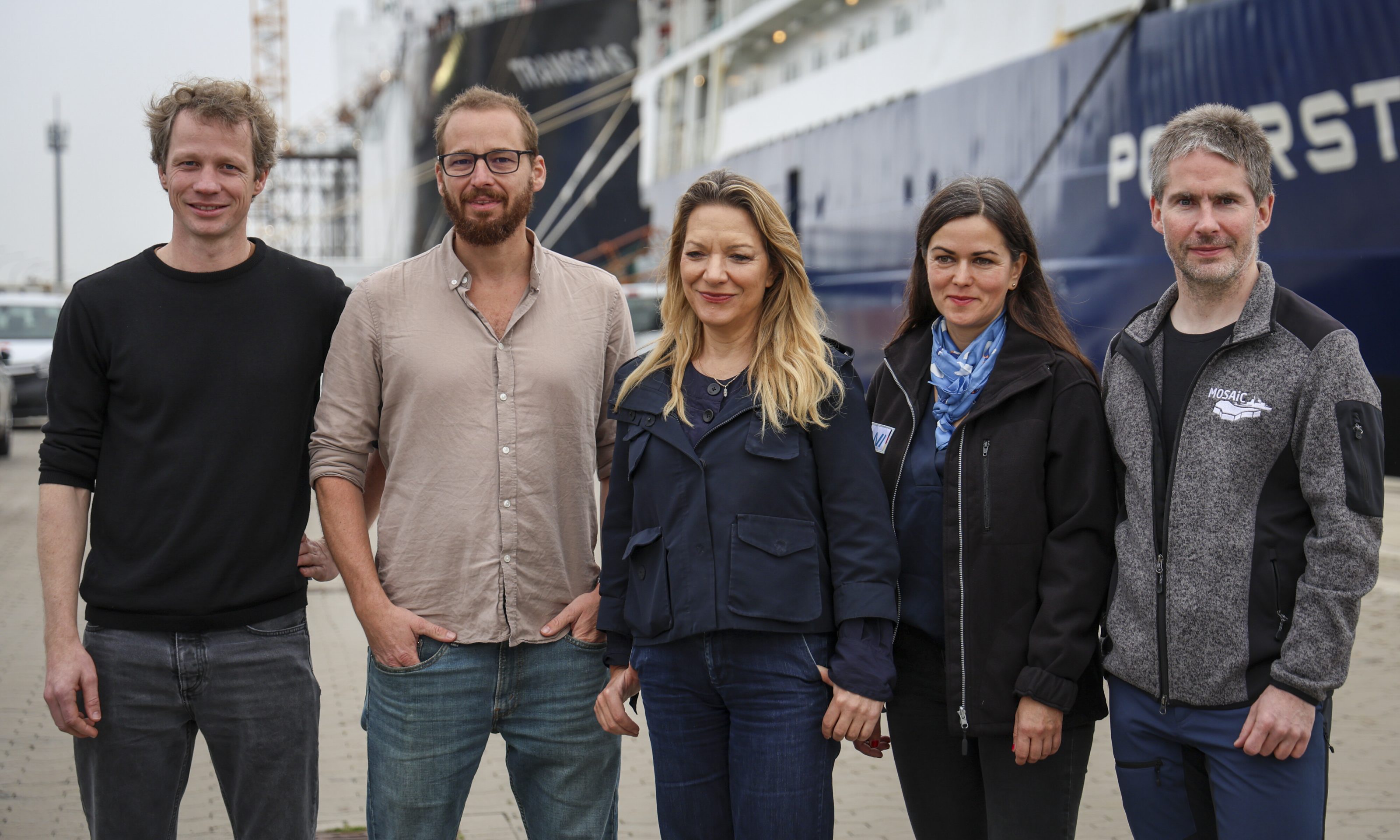
About the Arc.Watch expedition
The Arc.Watch expedition is the continuation of the IceArc expedition (2012). The Arc.Watch research team wants to find out how the rapid warming of the Arctic and the decline in sea ice is affecting the entire ocean system from the surface to the deep sea and how the biological network of life is adapting to the “New Arctic”. The biology, chemistry and physics of sea ice will be analyzed using a range of proven and new technologies. Marine biologist Antje Boetius already researched this eleven years ago on the IceArc expedition, and now the condition is to be recorded again. As in 2012, the investigations took place in the ice edge zone and in the central Arctic. Stations from the MOSAiC expedition were also repeated. Over 50 international scientific participants are on board the Arc.Watch expedition and 24 institutions from eight nations are involved.
You can also find more information about the expedition HERE.
Production facts
Direction
Camera
Nils Vogt
Cut
Mathieu Honoré, Vinzent Kutsche
Post-production
Achtfeld GmbH
Sound engineer
Benjamin Schimpke
Sound design
Odd One Audio
Composers
Dominik Eulberg, Hannes Kretzer
Graphic
Please.TV
Color correction
Fabian Smock
Speaker
Maria Furtwängler
Production management
Alexandra Wiedner, Moritz Widmann
Production management NDR
Tim Carlberg
Producers UFA Documentary
Marc Lepetit, Philipp Grieß
Junior Producer UFA Documentary
Simon Sacha
Editorial office
Marc Brasse (NDR), Ute Beutler (rbb), Michaela Herold (Radio Bremen) Sabine Mieder (hr)
Customer

Play credits
Pause credits