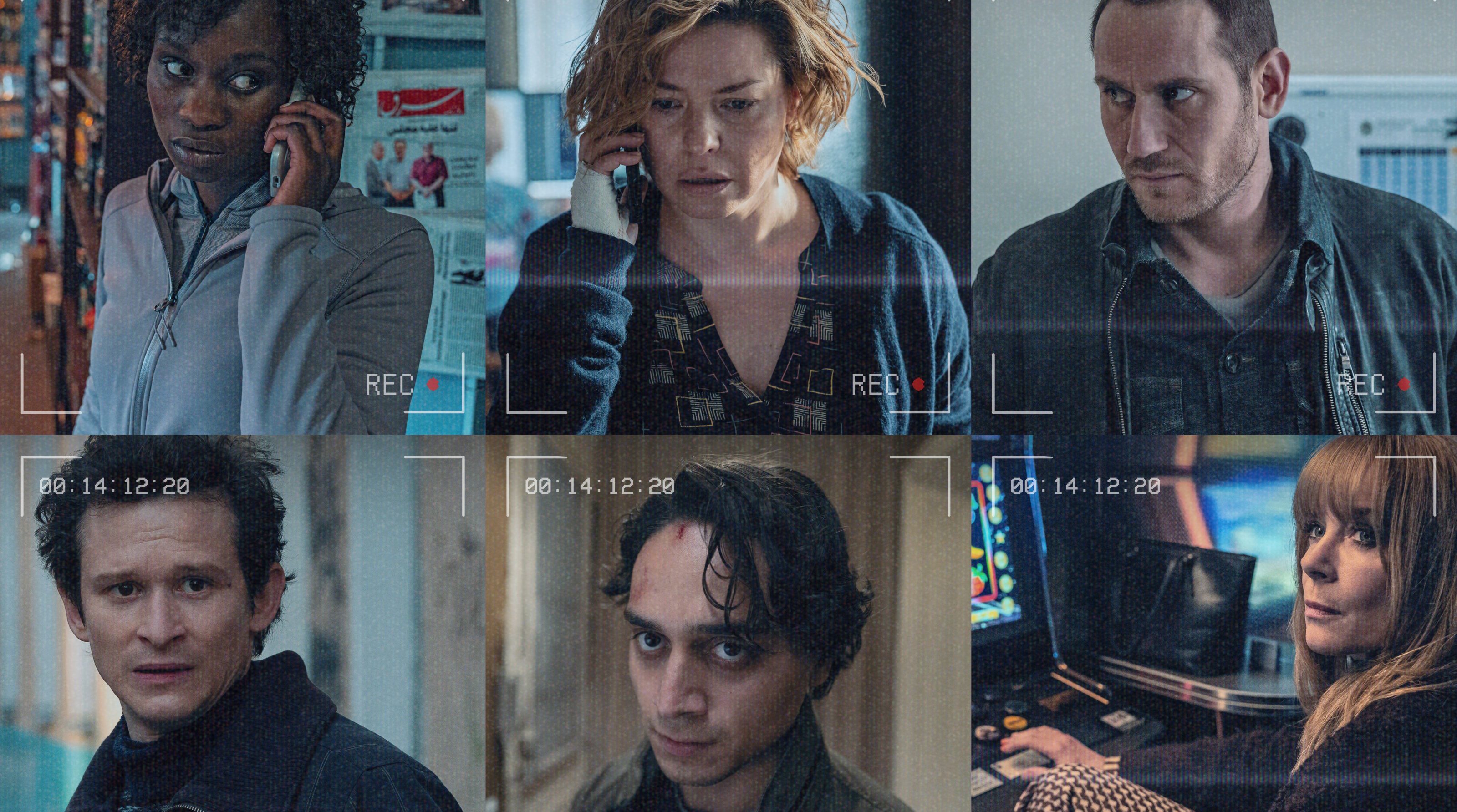

DER ÜBERFALL (original title)
UFA FICTION GmbH • Series & Series • ZDF • since 4.3.2022 in the ZDF media libraryThe robbery of a corner store triggers a fatal chain reaction. An eight-year-old boy disappears and an envelope containing a lot of money changes hands; a mother desperately searches for her child; a clique of young people try to make amends for a reckless act with unforeseeable consequences; a father with a criminal record tries to redeem himself and the personnel manager of a large corporation (Katja Riemann), who is on the brink of collapse, does everything she can to cover up her downfall. Over a period of six days, a fan of stories and secrets of the people involved in the robbery opens up.
on March 4, 2022 at 9:15 p.m., March 5 at 9:45 p.m.
on March 11, 2022 at 9:15 p.m., March 12 at 9:45 p.m.
on March 18, 20222 at 21:15, March 19 at 21:45
DER ÜBERFALL is a production of UFA Fiction GmbH for ZDF. The producer is Benjamin Benedict, the executive producer is Korinna Roters, Alisa Müller is producer. The ZDF editors are Caroline von Senden and Alexandra Staib. DER ÜBERFALL is supported by the German Motion Picture Fund, the Federal Government Commissioner for Culture and the Media, Medienboard Berlin-Brandenburg and FFF Bayern.
To the content
The robbery of a corner store has dramatic consequences. An eight-year-old boy disappears and an envelope containing a lot of money changes hands; the lives of people who have never had anything to do with each other collide and change forever. A mother desperately searches for her child, a clique of young people try everything they can to make up for a reckless act with unforeseeable consequences, a father with a criminal record is on the run with his daughter, and the personnel manager of a large corporation on the brink of collapse does everything she can to cover up her downfall. Antonia, the policewoman in charge of the investigation, is also increasingly drawn into the maelstrom of events in her fight against her domineering superior Frank Worms, in which her daughter Charly is not entirely innocent. Within six days, a fan of stories and secrets of the people involved in the robbery opens up. Does chance determine the events or is their fate predetermined? And could it be that life and death depend on 30,000 euros?
Episode 1: Monday: The shot
In a desperate attempt to get some quick cash, a gambling addict and a father with a criminal record commit a robbery in a small store – with unexpected consequences.
However, the unexpected windfall is short-lived for the pair. But the police detectives are also faced with a mystery when they arrive at the crime scene and find the body of the store owner and another victim.
The store owner, Iranian Hassan Merizadi, was killed by a shot fired at close range. Another shot hit the customer Bertram at the back of the store, seriously injuring him. His companion Katharina and the young brother of the killed Hassan, Damon, can only give a fragmentary and difficult description of what happened to detectives Frank Worms and Oliver Meyer.
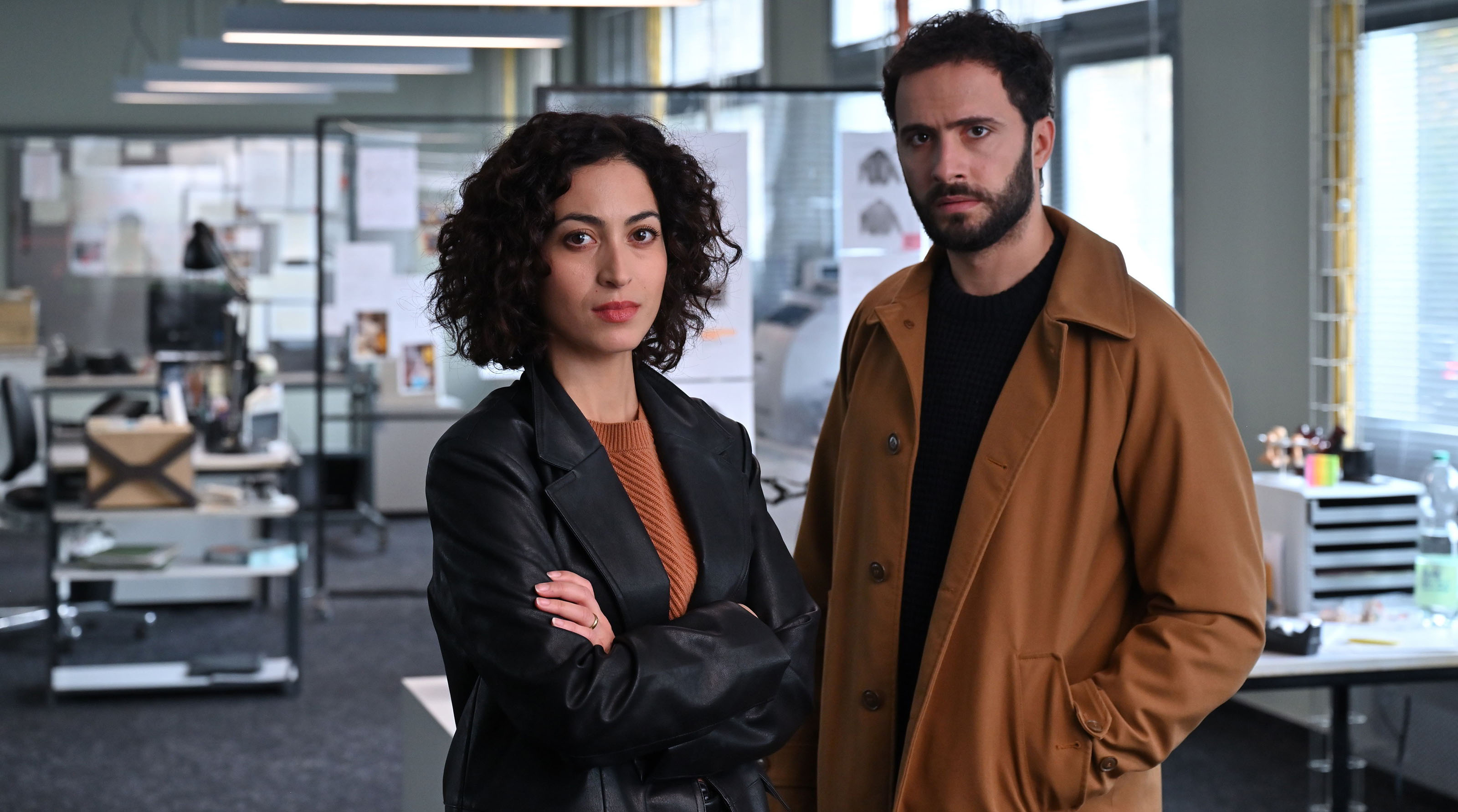
When disgraced policewoman Antonia Gebert is brought into the investigation, tensions arise between colleagues. The two robbers, gambling addict Paula Schönberg and Daniel Kowalski, who has a criminal record, are also confronted with further problems after their narrow escape. Miriam, the widow of the store owner, not only has to cope with the death of her husband, her eight-year-old son Arian has disappeared without a trace. But one thing is clear: Damon, the murdered man’s brother, and his friends have something to hide.
Episode 2: Tuesday: The missing child
New evidence leads to further findings in both investigations, but also to surprising personal conflicts.
Daniel Kowalski, who already has a criminal record, receives a visit from his daughter Mila and has to deal with an eviction suit that causes unpleasant changes. Meanwhile, the air is getting thinner and thinner for gambling addict Paula Schönberg.
Head of HR Paula is informed by her assistant Maria Belz about the internal audit department. She is on her trail because Paula seems to have embezzled money several times via a dummy company. The general code to a locked office is supposed to help Paula, but requires an alliance with the company’s former cleaner, Daniel Kowalski.
Using new footage from the surveillance camera, policewoman Antonia Gebert discovers that the stolen envelope full of money was snatched from the two perpetrators by a masked person outside the store. She realizes with horror that this is her 14-year-old rebellious daughter Charly.
Witness Katharina Abelt surprises the police with a statement. There is also renewed hope in the search for the missing boy. Meanwhile, the argument between Damon Merizadi, his girlfriend Samira and her brother Jacub threatens to escalate.
Episode 3: Wednesday: 30,000 euros
One of the perpetrators is to be identified, but Damon, the dead man’s brother, hesitates. Instead, he and his friends come up with a plan to settle the debt with the actual shooter.
The previously strained relationship between policewoman Antonia and detective Frank Worms becomes increasingly intimate. The witness remembers more and more disturbing details from the day of the robbery. However, a debit of 30,000 euros raises new questions. Hassan Merizadi had withdrawn the money shortly before his murder, but had not told his wife Miriam about it. Charly, the daughter of the investigating policewoman Antonia, finds the money envelope again, which she had snatched from the perpetrators without being recognized by the other detectives and initially disposed of in the adjacent park, and hides it with her old and lonely neighbor Franz Precht. She is surprised to find an unusual friend in him. Daniel Kowalski, who has now been confirmed by Damon as one of the perpetrators, wants to make a deal with Frank Worms. Meanwhile, Damon meets his brother Hassan’s murderer and tries to buy his own freedom and that of his nephew Arian, who is still missing. But instead, drug dealer Chris gives him an ultimatum. Damon also has to realize that Chris and Frank Worms obviously know each other.
New investigations shed light on the possible second perpetrator, and the secret of the teenagers Damon, Samira and Jacub is in danger of being revealed through carelessness.
Episode 4: Thursday: The plan
Miriam, the wife of the murdered store owner, turns up unexpectedly at the police station with her son Arian, who has been missing until now. The investigating team is suspicious, something is not right. Is the boy really Arian?
Meanwhile, witness Katharina receives an unexpected visit from drug dealer Chris. Police officer Frank Worms arranges to meet Daniel Kowalski at a playground. The police officer’s plan is to plant the murder weapon on Kowalski, who is still wanted as an urgent suspect.
Worms’ mission fails, but leaves Mila, Kowalski’s daughter, traumatized. Even Samira, Damon’s girlfriend, who initially wants to help him out of the threat posed by Chris and ask her father for money, ultimately prefers to study at Oxford.
14-year-old Charly wants to give Damon back the money she is still hiding and which she now knows he urgently needs, but gets cold feet. In the meantime, Frank Worms also realizes that the unscrupulous drug dealer is still hiding ChrisDamon’s nephew Arian as collateral. However, the detective has to deliver Kowalski in return. What is Chris blackmailing him with?
Paula Schönberg tries to make incriminating receipts disappear in the company. The HR manager surprisingly finds an ally in her assistant Maria. Damon does not remain idle either and, together with his friends Samira and Jacub, follows Chris’ car. He is sure that he is leading them to Arian.
Episode 5: Friday: The Betrayal
Damon and his two friends have one more day to pay their debt to drug dealer Chris. However, Samira and Jacub are overwhelmed by the situation and leave Damon alone.
Policewoman Antonia Gebert confronts Miriam Merizadi. She now knows that the boy in the police station was not her missing son Arian. Miriam now seems to have lost all hope and still asks her mother, from whom she is estranged, for help.
Daniel Kowalski and his daughter Mila reconnect while on the run. Meanwhile, Paula Schönberg is worried about her assistant Maria, who is now also wanted by her company’s internal audit department. However, the HR manager seems to know more and ponders this in her therapy session with psychologist Katharina Abelt. Drug dealer Chris also meets her when he pays a visit to the seriously injured kiosk customer Bertram Lause in hospital. Katharina’s sister and Bertram’s wife Petra are also present.
Policewoman Antonia increasingly turns against her superior Frank Worms, whose investigative methods she begins to question. Frank feels betrayed by Antonia and stabs her in the back. The gambling-addicted personnel manager Paula Schönberg also sees no way out and turns herself in to the police.
Episode 6: Saturday: Between life and death
Paula Schönberg benefits from the leniency program, but accomplice Kowalski is in a quandary when she wants to meet him at an agreed meeting point.
Policewoman Antonia learns that Frank Worms is being put under pressure by drug dealer Chris, and also knows of Kowalski’s innocence. She tries to stop the raid, but the situation escalates when Daniel finds out about Paula’s betrayal. Nevertheless, Worms wants to see it through.
The police officer begs drug dealer Chris to let the kidnapped Arian live. Meanwhile, Arian’s mother Miriam is waiting for her own mother, who was only able to raise 15,000 euros, half of the sum demanded by Chris. Miriam is now desperately confronted by the kidnapper of her child. Her only goal – to get Arian back. But is he still alive?
Statement, Benjamin Benedict (Producer)
The six-part thriller drama tells the story of how the lives of all the protagonists change forever based on the eponymous RAID and how their hopes and illusions are put to the test in an interplay of chance and fate.
Each episode depicts a day – and in these days we experience the characters in their multi-layered depths and see how a complex puzzle comes together. It is about the question of identity in times of crisis and questioning
decisions. How much influence do we have on the course of our lives?
Within these six days, new internal and external conflicts constantly arise, which drive the plot forward by forcing our protagonists to act, often against their moral nature. The characters try to oppose their own downfall and fight for their own lives.
We worked meticulously on the development of the characters and the story. The series is the result of an intensive and productive dialog. Stefan Kolditz and Katja Wenzel have written great books, and I would like to thank Caroline von Senden and Alexandra Staib for their trusted partnership and their enormous enthusiasm and commitment to this project! The first collaboration with Stephan Lacant and his creative team was also a huge gift.
The outstanding cast, who were always passionate about their work, brought the characters to intense life and our UFA production team, led by executive producer Korinna Roters and producer Alisa Müller, made this series possible despite Corona. The mutual trust, willingness to take risks and open communication are central factors in the development process. In the genesis of this project, the passionate commitment of many people came together to create this great narrative of lives connected in many ways.
We hope that the audience will be captivated by the exciting and complex story arcs of the characters – and that the audience will accept the invitation to make up their own minds about what is happening. Openness of interpretation is a central criterion for the value of a narrative, and it is important for us to understand this openness as an offer.
Statement, Katja Riemann (role of Paula Schönberg)
Two desperate people
What interested me most about the project DER ÜBERFALL was the fact that the character is a gambler, lives in a car, has lost everything because she couldn’t get her addiction under control and leads a double life. In my preparations and conversations with gamblers (yes, all male), I learned that it’s not about winning, but about the process of gambling,
that this addiction to slot machines is very common and far from the glamor of the roulette table, that the stakes, the 50 cent coins, are the ‘stuff’, as one gambler who led a double life for 30 years, as a political journalist and slot machine player, explained to me.
Furthermore, I am a fan of Stephan Lacant’s directing work, and it was a great pleasure to work with him, intense, inspiring, interesting, always full of joy, cooperation and kindness. The collaboration with my colleague Joel Basman was great. And how relaxing it is that two desperate people from different worlds and generations come together and experience peace and affection for the moment of their affair – without everything always being explained. In my work as an actress, I always try to give inner processes a corresponding appearance in order to offer viewers a channel to enter the emotional world of the character. That’s why Paula Schönberg looks the way she does: Her face hidden behind hair and make-up, her gait tense, her reactions held, on her guard against the possibility of being discovered, trying through her appearance and good but unwashed clothes to still represent or be something that has long since begun to dissolve.
Questions for... Lorna Ishema, Sebastian Zimmler, Yasin Boynuince, Karolina Lodyga, Joel Basman
…Lorna Ishema (Antonia Gebert)
Antonia Gebert is a quiet observer who seems to analyze the robbery in a different way. What principles does she apply to the investigation?
Antonia works professionally, thoughtfully, persistently and confrontationally. It was important to me that Antonia stands in contrast to her colleagues Frank and Oliver. I imagined that Antonia picks up the scent as soon as she is on to something, which means that her senses are heightened, both concretely and figuratively.
Antonia is constantly ignored by her colleague Frank Worms. He doesn’t trust her intuition and has an almost contradictory idea of how the robbery happened. How does Antonia deal with this?
She remains persistent and professional. Antonia tries to assert herself wherever possible and is not afraid of confrontation.
What is special about the narrative style of a very short period of only a few days? To what extent can the character Antonia Gebert develop here – especially with regard to the case and her new colleagues?
All the characters live at their emotional limits, and the short narrative timeframe made it a challenge to get to the heart of my character’s urgency without turning it into a caricature or template. Antonia develops from a person who senses a new opportunity for herself to a person who clearly positions herself and knows her place – which told me quite a lot about her personality.
What attracted you to the role of a young policewoman in the big city?
We meet her at a very chaotic point in her life, both professionally and privately. I was interested in the quiet vehemence with which she tries not to fall apart. What’s more, in my research I found few women who could serve as role models and none who looked like Antonia. So I wondered what it must have cost Antonia emotionally to achieve this position. On top of that, she became a mother at a very young age. I found it incredibly interesting to examine all these parts of her personality.
…Sebastian Zimmler (Frank Worms)
Frank Worms and Antonia meet by chance in the kiosk shortly after the robbery. Why does Frank bring Antonia onto the team, even though he continually ignores her opinions and assessments?
For Frank Worms, there are perhaps two impulses. Firstly, her initial theory about the course of the crime plays into his hands, giving him time to think. Secondly, Antonia’s previous history means she doesn’t have a good standing in the department and he knows how to exploit this and use it for his own purposes.
Frank Worms sometimes taunts with xenophobia. Does his position allow him to get away with more than others? And is this power seductive?
Xenophobia in the police force is a structural problem, and Frank Worms uses an “us against them” narrative. He carries this narrative in front of him like a shield of protection or justification, although as chief superintendent he is naturally in a position of power that hardly allows for any resistance or contradiction. If you look at human history, power in general seems to me to be very seductive. In this case, his power serves the purpose of steering the investigation in a certain direction.
What did it mean for you to work under the direction of Stephan Lacant?
Sometimes you can’t fit a sheet of paper between the actors and Stephan Lacant. He is very good at creating a closeness to the characters. From this intimacy, he is able to make the characters’ attitudes, states and emotions very visible.
…Yasin Boynuince ( Damon Merizadi)
When Damon’s brother is shot dead in the kiosk, Damon sees it as his most important task to protect his nephew and his mother Miriam. Does he feel guilty about the death of Hassan Merizadi?
Definitely, but Damon first had to deal with the shock and uncertainty and find the right moment to grieve, also to process the trauma. His ultimate goal is to find Arian, and until then he is obsessively trying to suppress the trauma he has experienced.
Together with his girlfriend and her brother, Damon tries to find Arian. How do the three of them go about it?
Of course, the first question that arises is who is to blame for the whole thing and how it could have happened. After mutual accusations and recriminations, the three of them come together again and work out together how they can act without Miriam finding out what really happened. Damon relies on his friends and is dependent on their help.
When you read the script by Stefan Kolditz and Katja Wenzel, what was it about the format that excited you?
I was very touched by the theme of how heavy a burden can be carried by a single young person. While reading and working through the book, I couldn’t shake off the idea of how deep a person can fall so hard in a single evening due to the naivety of their youth and overconfidence and not be able to get up again. In those six days,
the character goes through so many levels filled with self-loathing, shock, trauma, despair, sleeplessness and realizes that he doesn’t really have anyone to catch him. No one except his little nephew and his big brother, who died through his fault, and who were his only family. Yet the character fights as hard as he can, trying to suppress everything, constantly struggling not to lose his nerve, to make halfway right the damage he has done to his family by finding his nephew again. All in all, it’s a character that’s hard to digest and tugs at the heartstrings, but that’s what made it all the more exciting and fun
to tell and play.
…Karolina Lodyga (Miriam Merizadi )
Miriam Merizadi loses her husband and son in the space of a day. In desperation, she resorts to all means to find her son. Who does she trust?
In the end, Miriam Merizadi has no choice but to count on herself. In the six days in which the mini-series takes place, she gradually loses her faith in everyone and everything every day due to further strokes of fate. Only her faith in the love of her son remains, which gives her unexpected strength.
Miriam is on the verge of a breakdown throughout the episodes, but she fights and radiates incredible strength. How did you prepare for this very emotional role?
By constantly reading the books, I wanted to immerse myself as deeply as possible in this story. So I didn’t have to learn any more lines at the end. The emotional arc was so clear that filming was just a matter of reaching for the truth every second.
What did it mean for you to work under the direction of Stephan Lacant?
It is a great gift to work with such a clever and sensitive director. It was very intense and focused work based on great trust, even though it was my first time working with him. Through rehearsals and conversations before the shoot and the same vision, I was able to let myself go completely.
…Joel Basman (Daniel Kowalski)
Daniel Kowalski has been to prison before and is in the next mess. How well can he keep up the facade in front of his clever daughter?
He can’t do that. Maybe a little, but only with lies and an almost sick will to survive.
After he becomes the focus of the investigation, he quickly realizes that he is alone. What gives him hope of resolving the situation so that he doesn’t disappoint his family again?
His daughter.
Stefan Kolditz and Katja Wenzel wrote the screenplay together – what is special about the material for you?
It’s the way the story is told that really appeals to me. With lots of question marks and great “aha” moments! Also partly absurd in a positive way.
Editor's note (Caroline von Senden and Alexandra Staib)
With “Der Überfall”, the team of authors Stefan Kolditz and Katja Wenzel have not only created a thriller that is extremely fast-paced and full of twists and turns, but also a sketch of a very contemporary and contrasting group of people in a modern city. Seemingly by chance, but possibly also fatefully linked by a fatal event, each of them
reacts in their own way. Supposed truths turn out to be lies, and the foundations that had previously given them security are shaken. Director Stephan Lacant succeeds in keeping up the fast pace and thus maintaining the suspense, while at the same time exploring the tragedy of the characters in great detail. The result is a contemporary, captivating series that will not only entertain an audience that is still and always will be enthusiastic about crime thrillers and crime dramas, but will also touch them and confront them again and again with the question: “What would I have done?”.
Statement, Stefan Kolditz and Katja Wenzel
What is the whole truth?
A falling key.
A fish on a car windshield.
The door of a neighborhood store.
The view through a chicken god.
A snowy owl that sees everything.
And a broken mirror.
Splinters of experiences, decisions, truths. Isolated, like us humans. And yet everything belongs together. Whether we like it or not. Is it coincidence? Or fate? Is it the sum of our coincidences that becomes our fate? Or does unaffected fate send us its coincidences for our decisions?
We decided to write “The Raid” four and a half years ago. By chance? Definitely. Or was it not?
In any case, our long journey was full of twists and turns. Unexpected and hoped for.
Now it’s up to you to travel with the “hold-up”, through a world in which there can never be just one truth. What an opportunity!
Statement, Stephan Lacant (director)
The exciting thing about “The Raid” is the different realities of the individual characters’ lives, which are nevertheless all connected – whether by fate or by chance. Each character’s decision has an impact on the lives of the others. Everything is interconnected and interwoven.
The series poses important questions about life: Who are we at our core? What defines us deep down? Why do we do the things we do? Is there only one truth, or does everyone have their own?
With “The Raid”, we have created a captivating genre mix of drama, thriller and crime. The special thing about it is the multi-perspective narrative style. We’ve given each world and each character something of their own and yet brought these parts together to form a big whole.
It was a very special, creative journey to make this series. An extraordinarily close and inspiring collaboration with the authors, the editorial team and the producer. And it was a great experience to work with such a special ensemble of actors. We struggled together until the very end to tell the story in the best possible way.
Cast & Crew
CAST
Paula Schönberg
Katja Riemann
Antonia Gebert
Lorna Ishema
Daniel Kowalski
Joel Basman
Frank Worms
Sebastian Zimmler
Damon Merizadi
Yasin Boynuince
Miriam Merizadi
Karolina Lodyga
Charly Gebert
Marie-Rosie Merz
Jacub Malek
Mo Issa
Samira Malek
Amina Merai
Chris
Maximilian Brauer
CREW
Producer
Benjamin Benedict
Executive producer
Korinna Roters
Producer
Alisa Müller
Screenplay
Stefan Kolditz
Katja Wenzel
Direction
Stephan Lacant
Camera
Michael Kotschi
Editorial ZDF
Caroline von Senden
Alexandra Staib
Casting
Suse Marquardt, Maren Friedrich, Babet Mader
Production design
Stefan Schönberg
Costume design
Wiebke Kratz
Make-up
Tatjana Luckdorf
Cut
Dirk Grau
Music
René Dohmen, Joachim Dürbeck, Ege Ateslioglu
Production management
Ralf Krawanja
Production management
Franziska Strutz
Customer

Play credits
Pause credits